
Bus Stop Digital Displays: Design Considerations for Smart City Transit Infrastructure
- Jul 7
- 3 min read

As cities continue to modernize their public transportation systems, bus stop infrastructure is evolving from static signage into intelligent digital communication hubs. Modern transit shelters now integrate bus stop digital displays design considerations that ensure real-time information delivery, passenger convenience, and long-term operational reliability.
These systems are no longer simple advertising screens. They are mission-critical components of urban mobility networks that support real-time scheduling, route updates, emergency alerts, and passenger information services.
The Role of Digital Displays in Modern Bus Stops
Bus stop digital displays serve as the primary interface between transit systems and passengers. They provide real-time arrival times, route maps, service updates, and sometimes even city-wide information or advertising content.
In smart cities, these displays contribute to efficient mobility flow, reducing uncertainty for commuters and improving overall transportation experience.
More importantly, they act as distributed nodes in a larger intelligent transportation system, enabling cities to communicate directly with the public.
Environmental Durability: The First Engineering Requirement
One of the most critical bus stop digital displays design considerations is environmental resistance.
Bus stops are exposed to continuous outdoor conditions including rain, snow, wind, dust, humidity, and UV radiation. In many cities, they also face pollution and coastal salt exposure.
To ensure reliability, displays must incorporate:
Corrosion-resistant enclosure materials
Sealed gasket structures for environmental protection
UV-resistant front glass coatings
Waterproof and dustproof design standards
Without these protections, system uptime drops significantly, especially in high-traffic public environments.
Visibility and High-Brightness Performance
Unlike indoor displays, bus stop screens must remain readable under direct sunlight while also being visible at night.
High-brightness LCD technology (typically 2000–3000 nits) ensures consistent readability throughout the day.
However, visibility is not only about brightness. It also depends on:
Anti-glare and anti-reflective glass
Optical bonding to reduce reflection loss
Adaptive brightness control systems
These elements work together to ensure clear and consistent readability under all lighting conditions.
Thermal Management in Transit Environments
Another major factor in bus stop digital displays design considerations is thermal control.
Bus stop kiosks often operate in direct sunlight for extended periods, creating significant internal heat buildup.
Without proper thermal engineering, displays may suffer from:
Screen dimming or shutdown
Reduced backlight lifespan
System instability or reboot cycles
To prevent this, modern systems integrate:
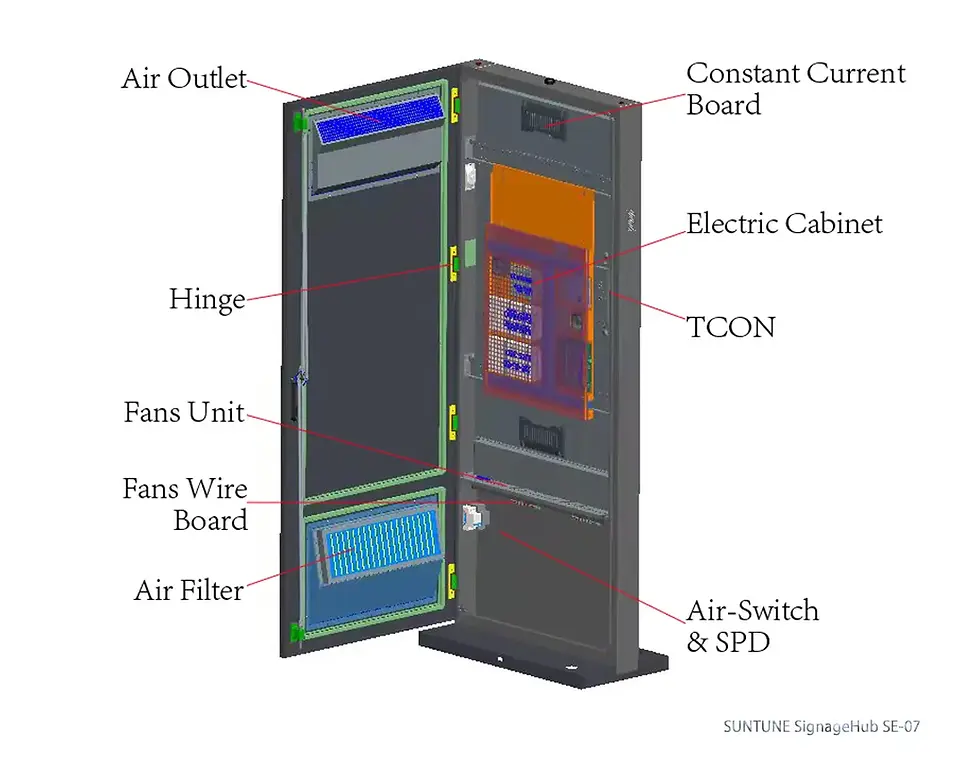
Passive and active airflow designs
Heat dissipation structures within enclosures
Temperature sensors for dynamic control
Effective thermal management ensures long-term system stability even in extreme climates.
Vandal Resistance and Public Safety
Because bus stops are public-facing installations, they must withstand potential vandalism and accidental impact.
This requires reinforced structural engineering, including:
Tempered or laminated safety glass
Shock-resistant enclosure frames
Scratch-resistant surface coatings
These features ensure both equipment protection and public safety, especially in high-density urban environments.
Durability and resilience are essential to maintaining uninterrupted public service.
Connectivity and Real-Time Data Integration
Modern bus stop digital displays are connected systems integrated with city-wide transportation networks.
They rely on:
Real-time transit data feeds
Cloud-based content management systems
Remote monitoring and diagnostics
Emergency alert integration
This connectivity allows transportation authorities to update schedules instantly and respond to disruptions in real time.
The result is a more responsive and intelligent public transportation system.
Maintenance and Lifecycle Efficiency
A critical but often overlooked aspect of bus stop digital displays design considerations is maintenance accessibility.
Transit networks require large-scale deployment across hundreds or thousands of locations. This makes service efficiency extremely important.
Key design features include:
Front or rear service access systems
Modular internal component design
Standardized replacement parts
Remote diagnostics capabilities
These features significantly reduce downtime and maintenance costs across large networks.
User Experience in Public Transit Environments
Bus stop displays must serve a diverse audience including commuters, tourists, elderly passengers, and individuals with disabilities.
Therefore, user experience design must prioritize:
Clear interface layouts
Multilingual support
High contrast readability
Simple navigation structures
The goal is to make transportation information accessible and intuitive for everyone, regardless of familiarity with the system.
The Future of Bus Stop Digital Infrastructure
As smart city ecosystems evolve, bus stop digital displays will become more intelligent and interactive.
Future systems are expected to include:
AI-driven passenger information systems
Predictive transit arrival modeling
Interactive touch and gesture interfaces
Integration with mobility-as-a-service platforms
Bus stops will increasingly function as urban data nodes, supporting both transportation efficiency and digital engagement.
Build Smart Transit Display Systems
If you are developing a smart city transportation project, public transit upgrade, or large-scale DOOH network, selecting the right bus stop display system is essential for long-term success.
At SUNTUNE SignageHub, we design and manufacture industrial-grade outdoor LCD systems engineered for bus stop digital displays design considerations, including durability, thermal stability, high brightness performance, and intelligent connectivity.
👉 Contact us today to discuss your transit signage project requirements, OEM/ODM customization, or large-scale deployment solutions.
Let’s build the next generation of smart transportation infrastructure together.


Comments