
Display Glass Technologies for Outdoor Use in Industrial Digital Signage Systems
- Jun 27
- 4 min read
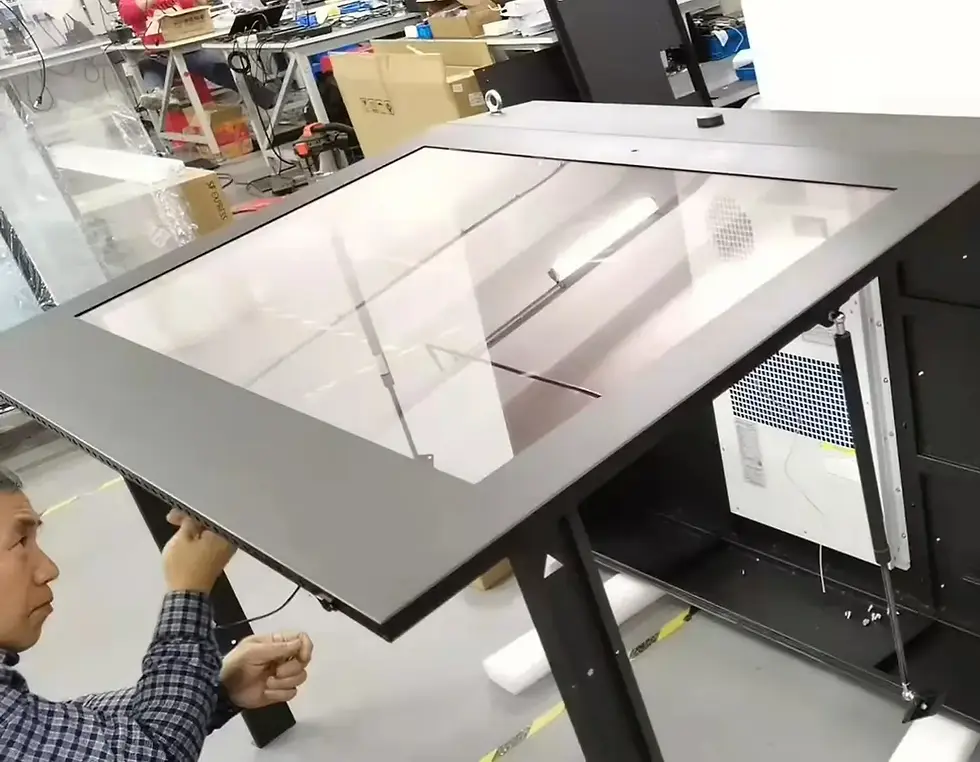
In outdoor digital signage, performance is often attributed to brightness, resolution, or system software. However, one of the most critical yet underestimated components is the protective surface layer. Modern display glass technologies for outdoor use play a decisive role in determining visibility, durability, and long-term system reliability.
For system integrators and infrastructure developers, glass is not just a protective cover—it is an optical and mechanical engineering interface between digital content and the real environment.
The Role of Display Glass in Outdoor Environments
Outdoor environments introduce multiple challenges: direct sunlight, UV exposure, temperature fluctuations, dust, and physical impact risks. Without advanced glass engineering, even high-performance LCD panels cannot maintain stable output quality.
Industrial-grade display systems rely on glass not only for protection but also for optical enhancement, environmental sealing, and structural reinforcement.
Tempered Safety Glass: The Foundation of Durability
One of the most widely used materials in outdoor applications is tempered glass. It provides high mechanical strength and improved resistance to impact and thermal stress.
Key advantages include:
High resistance to physical shock
Controlled fracture patterns for safety
Improved thermal stability under sunlight exposure
In industrial signage systems, tempered glass serves as the first layer of structural protection, ensuring baseline durability in public environments such as transportation hubs and retail streets.
Anti-Glare and Anti-Reflective Coatings: Visibility Enhancement
Outdoor readability is one of the biggest challenges in digital signage. Sunlight reflections and ambient light interference can significantly reduce content clarity.
Anti-glare (AG) and anti-reflective (AR) coatings are essential display glass technologies for outdoor use that directly improve user experience.
These technologies work by:
Diffusing reflected light to reduce glare intensity
Minimizing surface reflection for better contrast
Enhancing readability at wide viewing angles
As a result, content remains visible even under direct sunlight or high ambient brightness conditions.
Optical Bonding: Eliminating Internal Reflection
Optical bonding is one of the most advanced glass integration technologies used in industrial outdoor displays.
Instead of leaving an air gap between the cover glass and LCD panel, a transparent adhesive layer is used to bond them together.
This process significantly improves performance by:
Reducing internal reflection and light refraction
Increasing contrast ratio and color saturation
Improving structural shock resistance
Preventing condensation and dust ingress inside the display stack
Optical bonding is a key factor in achieving high-clarity outdoor visibility, especially for high-brightness (2500–3000 nits) systems.
UV Resistance and Long-Term Optical Stability
Continuous exposure to ultraviolet radiation can degrade both glass coatings and internal display components over time.
Advanced outdoor glass systems incorporate UV-resistant materials that ensure long-term stability of optical properties.
This protects against:
Yellowing or discoloration over time
Coating degradation under sunlight
Loss of transparency and clarity
Maintaining optical stability is essential for multi-year deployment cycles in smart city and DOOH infrastructure networks.
Impact Resistance and Public Environment Safety
Outdoor displays are often installed in public-access environments where accidental impact or vandalism risk exists.
Glass systems must therefore meet high mechanical safety standards, including:
Reinforced impact resistance layers
Laminated safety structures in high-risk installations
Scratch-resistant surface treatments
This ensures both equipment protection and public safety compliance in urban environments.
Thermal Behavior of Display Glass Systems
Glass is not only a visual medium but also a thermal interface.
In high-brightness outdoor displays, solar radiation passes through the glass layer and generates internal heat buildup. Without proper thermal design, this can affect LCD performance.
Modern display glass technologies for outdoor use address this through:
Low-iron glass for better light transmission control
Heat-reducing coatings
Optimized optical bonding materials with thermal stability
This contributes directly to system reliability and lifespan.
System Integration: Glass as Part of the Display Ecosystem
In modern industrial outdoor signage, glass is no longer a passive protective layer. It is an active component of the system architecture, influencing:
Optical performance
Thermal management
Mechanical durability
Environmental sealing efficiency
This integration transforms glass into a critical engineering layer within the overall display system.
The evolution of glass technology is closely aligned with the development of smart city infrastructure and high-performance DOOH networks.
The Future of Outdoor Display Glass Engineering
As outdoor digital signage expands into more extreme environments, glass technologies will continue to evolve toward:
Higher transparency with lower reflection loss
Self-cleaning surface coatings
Enhanced thermal dispersion capabilities
Smarter optical materials integrated with sensor systems
The future of display glass technologies for outdoor use lies in multifunctional engineering materials that combine protection, optics, and environmental adaptation in a single layer.
Outdoor Digital Signage Glass & Display Solutions
If you are developing outdoor digital signage systems, transportation kiosks, or smart city infrastructure, selecting the right display glass technology is critical for long-term performance and visibility.
SUNTUNE provides industrial-grade outdoor LCD solutions integrated with advanced glass technologies including anti-glare, optical bonding, and high-durability protective systems.
👉 Contact us to discuss your project requirements, customization needs, or OEM/ODM display solutions.
Let’s engineer reliable and high-visibility outdoor signage systems for your application environment.


Comments