
How to Extend the Lifespan of Outdoor Displays: Engineering Strategies for Long-Term Reliability
- 4 days ago
- 4 min read

Outdoor digital signage systems represent a significant investment, especially when deployed across transportation networks, smart cities, retail environments, and public infrastructure projects. However, the true value of an outdoor display is not determined only by its initial specifications—it depends on how reliably it performs throughout its operational life.
Understanding how to extend the lifespan of outdoor displays requires looking beyond the screen itself. Long-term reliability depends on a combination of thermal engineering, environmental protection, installation quality, and proactive maintenance.
A well-designed outdoor display system can continue delivering stable performance for many years, while a poorly managed system may experience premature failures despite using high-quality components.
Thermal Management: The Foundation of Display Longevity
Heat is one of the greatest threats to outdoor display reliability.
Outdoor LCD systems operate under two simultaneous heat sources: internal heat generated by components and external heat absorbed from sunlight.
High-brightness LCD displays, especially those operating at 2,500 nits or higher, generate significant thermal loads through backlight systems, power supplies, and electronic components.
Without proper heat management, excessive temperature can accelerate component aging and lead to:
Reduced backlight performance
Electronic component degradation
Unexpected system shutdowns
Shortened product lifespan
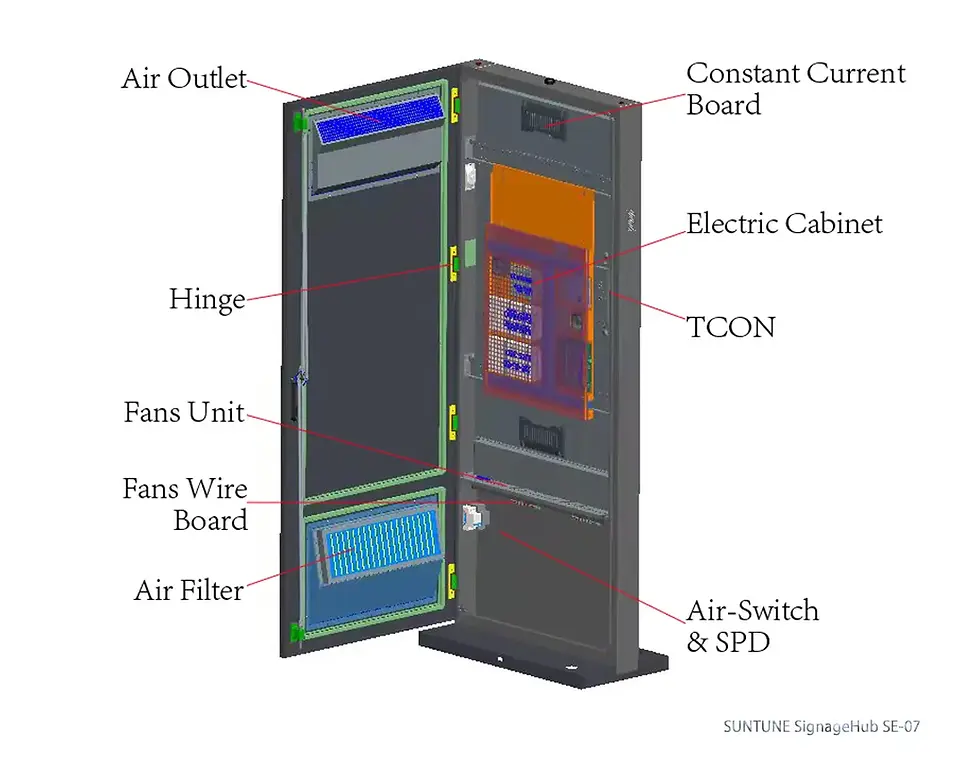
Effective thermal engineering, including optimized airflow, heat dissipation structures, temperature monitoring, and intelligent cooling control, is essential for maintaining stable operating conditions.
Protecting the Display with Proper Enclosure Engineering
The enclosure is the protective foundation of an outdoor digital signage system.
A reliable enclosure must defend internal components against rain, dust, humidity, UV exposure, and physical impact while maintaining effective heat control.
Important enclosure considerations include:
Weather-resistant sealing systems
Corrosion-resistant materials
Proper cable entry protection
Service-friendly internal layouts
A strong enclosure design does more than provide environmental protection. It creates a controlled operating environment where electronic components can perform consistently.
Enclosure quality directly influences display lifespan.
Managing Sunlight and Optical Stress
Direct sunlight creates two major challenges for outdoor displays: visibility and heat absorption.
High-quality outdoor systems use technologies such as high-brightness LCD panels, anti-glare glass, anti-reflective coatings, and optical bonding to improve readability while reducing optical performance degradation.
Reducing unnecessary solar heat gain helps lower internal temperatures and decreases the workload placed on cooling systems.
This makes optical engineering an important part of extending outdoor display durability.
Preventing Moisture and Environmental Damage
Outdoor environments expose displays to changing weather conditions throughout the year.
Humidity, condensation, rain, and airborne pollutants can gradually damage internal electronics if protection measures are insufficient.
To improve reliability, outdoor displays should include:
Proper IP-rated enclosure protection
Waterproof cable management
Condensation control methods
Durable external materials
Environmental protection is not only about preventing immediate failures. It is about reducing gradual damage that appears after years of operation.
Using Quality Components and Industrial Grade Hardware
The lifespan of an outdoor display depends heavily on the quality of internal components.
Consumer-grade parts may perform well in controlled indoor environments but often struggle under continuous outdoor operation.
Industrial outdoor displays typically require:
Long-life backlight systems
Reliable power supplies
Temperature-resistant electronic components
Durable cooling solutions
Selecting appropriate components creates a stronger foundation for long-term system reliability.
Performing Preventive Maintenance
Even the most advanced outdoor display requires regular maintenance.
Preventive maintenance helps identify small problems before they become expensive failures.
Recommended practices include:
Cleaning front glass surfaces to maintain brightness
Checking seals and cable connections
Inspecting cooling systems
Monitoring operating temperature
Reviewing system performance data
Regular maintenance improves uptime and reduces unexpected service interruptions.
Optimizing Installation Conditions
Installation quality has a direct impact on outdoor display lifespan.
Factors such as location, orientation, mounting structure, and environmental exposure all influence system performance.
For example, a display facing direct afternoon sunlight may experience significantly higher thermal stress than one installed in a partially protected location.
Professional installation considers:
Sun exposure direction
Airflow clearance
Structural stability
Accessibility for maintenance
Correct installation allows the display to operate closer to its optimal conditions.
Managing Brightness and Power Consumption
Running a display at maximum brightness continuously is not always necessary.
Modern outdoor systems can use intelligent brightness adjustment to match environmental conditions.
During nighttime or low-light periods, reducing brightness can:
Lower energy consumption
Reduce heat generation
Extend backlight lifespan
Improve operational efficiency
Smart power management is an effective way to improve both display longevity and sustainability.
Monitoring System Performance Continuously
Advanced outdoor digital signage networks increasingly use remote monitoring systems to track performance.
Real-time monitoring can detect:
Temperature abnormalities
Cooling system issues
Power irregularities
Display performance changes
Early detection allows operators to perform maintenance before a small issue becomes a major failure.
This approach transforms maintenance from reactive repair into predictive management.
The Future of Longer-Lasting Outdoor Displays
As outdoor digital signage expands into more demanding environments, lifespan optimization will become an increasingly important engineering priority.
Future outdoor display systems will integrate smarter thermal control, AI-based maintenance prediction, improved materials, and more efficient power management technologies.
The question of how to extend the lifespan of outdoor displays will continue evolving from simple maintenance practices into a complete lifecycle engineering approach.
The most reliable outdoor displays will be those designed not only for initial performance but also for years of continuous operation in real-world conditions.
Build Longer-Lasting Outdoor Digital Signage Solutions
Extending the lifespan of outdoor displays requires the right combination of technology, engineering, and maintenance strategy.
At SUNTUNE SignageHub, we design industrial-grade outdoor LCD display solutions with advanced thermal management, durable enclosure systems, high-brightness performance, and reliability-focused engineering.
Whether you are developing transportation displays, smart city kiosks, retail signage networks, or customized outdoor solutions, our team can help you build systems designed for long-term operation.


Comments