
Outdoor Display Placement: Why Sun Angle Matters for Outdoor LCD Performance
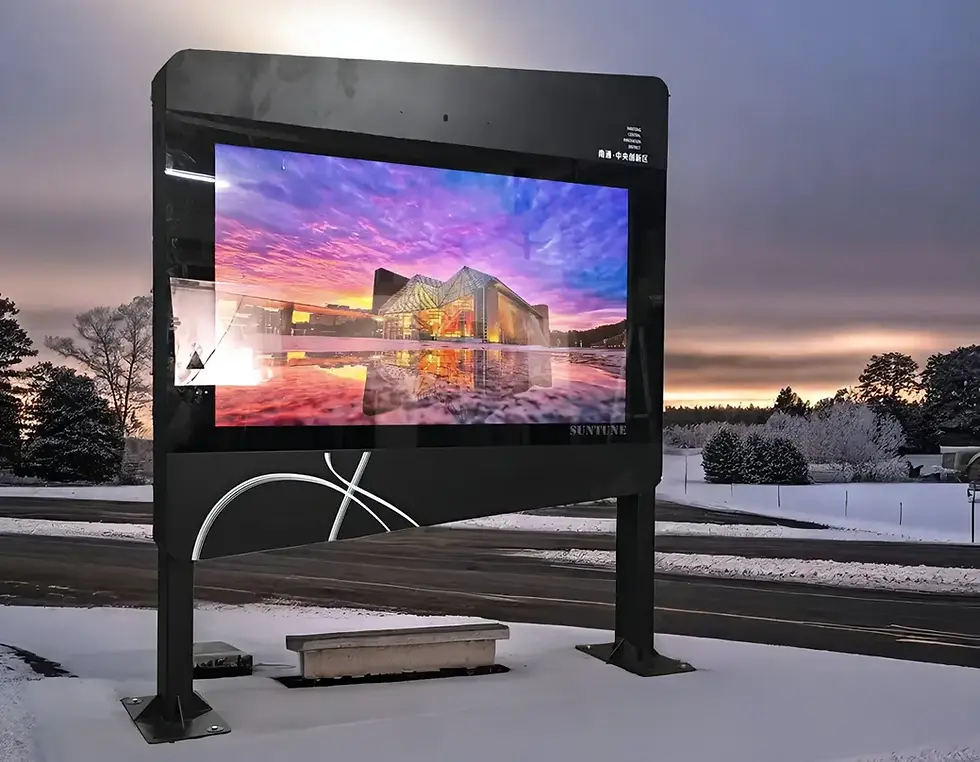
Outdoor digital signage is designed to operate in challenging environments, but even the most advanced outdoor LCD systems can struggle if installed in the wrong location. One of the most overlooked factors in outdoor display engineering is sunlight direction and screen orientation.
Understanding the relationship between outdoor display placement sun angle and display performance is essential for improving visibility, reducing thermal stress, and extending system lifespan. In many outdoor installations, the position of the sun can have a greater impact on display reliability than brightness specifications alone.
As outdoor LCD deployments continue expanding across transportation, retail, hospitality, and public infrastructure, proper display placement has become a major engineering consideration rather than a simple installation detail.
Why Sun Angle Matters for Outdoor Displays
Sunlight affects outdoor displays in two major ways: visibility and heat.
Direct sunlight creates glare and reflections that reduce screen readability. At the same time, solar radiation increases enclosure and panel temperatures, placing additional stress on internal components.
Even high-brightness displays can appear washed out if the screen is positioned directly toward strong sunlight during peak daytime hours.
This is why outdoor display placement sun angle must be evaluated carefully before installation. A display that performs perfectly in laboratory conditions may experience major visibility or overheating problems if its real-world orientation is poorly planned.
The Relationship Between Sunlight and Visibility
Visibility is one of the primary goals of outdoor digital signage. However, screen brightness alone cannot fully solve visibility challenges.
When sunlight strikes the display surface at unfavorable angles, reflections increase dramatically. These reflections reduce image contrast and make text or video difficult to read.
Morning and afternoon sunlight can be especially problematic because the lower sun angle often creates direct glare toward viewers.
Proper placement helps minimize these reflection zones. In many cases, adjusting the screen orientation slightly away from direct sun exposure can significantly improve readability without increasing brightness levels.
This becomes particularly important for applications such as:
Drive-thru menu boards
Outdoor kiosks
Transportation signage
Stadium wayfinding systems
Public information displays
For these systems, visibility consistency throughout the day is more important than peak brightness numbers alone.
Solar Loading and Thermal Stress
The second major impact of sunlight is heat generation.
Outdoor LCD displays already generate internal heat from high-brightness backlights and electronic components. Direct solar radiation adds additional thermal load on top of this internal heat production.
This combined heat buildup is known as solar loading.
Poor outdoor display placement sun angle can dramatically increase solar loading, especially during midday exposure. Surfaces exposed directly to sunlight absorb heat continuously, causing enclosure temperatures to rise beyond safe operating ranges.
Over time, excessive thermal stress can contribute to:
LCD blackening
Backlight degradation
Color distortion
Component aging
Reduced brightness stability
System shutdowns
This is why thermal engineering and installation planning must work together.
Orientation Strategies for Outdoor LCD Installations
Professional outdoor display deployments often use orientation strategies to reduce sunlight exposure.
North-facing orientations are frequently preferred in regions with strong southern sun exposure because they reduce direct sunlight impact during peak daytime hours.
In some installations, angled mounting structures are used to redirect reflections away from viewers while also reducing heat absorption.
Environmental shading from nearby buildings, canopies, or architectural structures can also help improve long-term display performance.
However, shading alone is not always enough. Seasonal sun movement changes sunlight angles throughout the year, meaning a display that performs well in winter may face severe sunlight exposure during summer months.
Because of this, advanced installation planning often includes solar path analysis before deployment.
Why Brightness Alone Cannot Solve the Problem
A common misconception in outdoor signage is that higher brightness automatically guarantees better performance.
In reality, brightness increases also generate more internal heat. If solar loading is already high due to poor placement, simply increasing brightness may worsen thermal problems.
This creates a cycle where:
More brightness generates more heat
More heat reduces efficiency
Reduced efficiency shortens lifespan
The most effective outdoor display systems balance:
Brightness
Optical bonding
Anti-reflection technology
Thermal management
Smart placement strategies
This integrated engineering approach delivers better long-term performance than relying on brightness alone.
Placement Planning for Different Outdoor Applications
Different applications require different placement considerations.
Drive-thru displays often face long periods of direct afternoon sunlight, requiring careful orientation to maintain readability for drivers.
Transportation displays may need visibility from multiple directions, creating additional challenges for glare control.
Retail storefront displays must balance pedestrian visibility with sunlight exposure through glass surfaces.
Industrial and infrastructure environments may experience additional heat from surrounding equipment or pavement, increasing overall thermal stress.
Because every installation environment is different, proper site evaluation is essential before selecting and positioning outdoor LCD systems.
The Future of Smarter Outdoor Display Deployment
As outdoor digital signage becomes more advanced, display placement will increasingly be integrated into overall system engineering.
Future outdoor LCD systems may incorporate:
Intelligent brightness adjustment
Environmental heat sensors
Real-time thermal monitoring
Predictive cooling systems
AI-assisted display optimization
Combined with improved optical technologies and more efficient thermal designs, these innovations will help outdoor displays operate more reliably in increasingly demanding environments.
However, even the most advanced display technology still depends heavily on proper placement strategy from the beginning.
Understanding outdoor display placement sun angle is no longer optional for professional outdoor signage projects—it is a fundamental part of ensuring visibility, reliability, and long-term return on investment.
Capture Leads Interested in Digital Signage Solutions
Planning an outdoor digital signage project?
Our team specializes in high-performance outdoor LCD solutions engineered for sunlight visibility, thermal management, and long-term reliability. From display selection to installation strategy, we help businesses optimize outdoor signage performance in real-world environments.
👉 Contact us today to discuss your outdoor display application or request a customized digital signage solution.


Comments