
Outdoor Displays for Public Information Systems: Building Clearer Communication in Public Spaces
Public information has traditionally depended on static signs, printed posters, notice boards, and manually updated information panels.
These methods still have their place, but modern public spaces are changing faster than traditional signage can respond.
Transportation schedules change in real time. Roads close unexpectedly. Weather conditions develop rapidly. Public events are updated. Emergency situations require immediate communication. Visitors need directions without waiting for staff assistance.
In these environments, information is only useful when it reaches people at the right moment.
This is where digital display technology is changing the role of public communication.
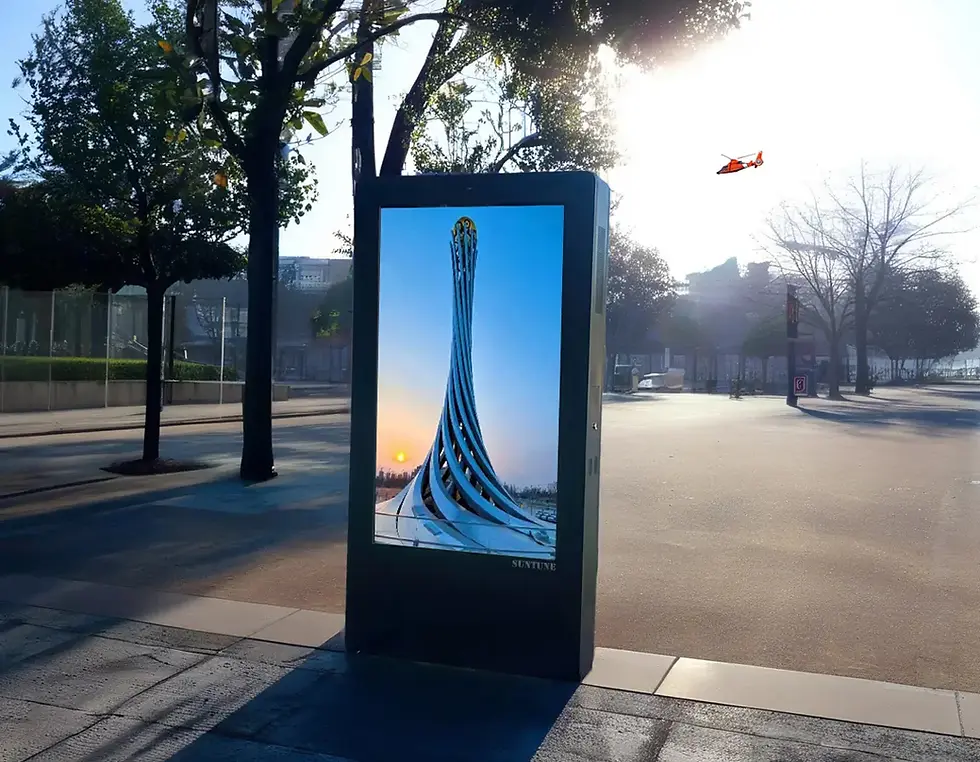
Outdoor displays for public information systems provide a dynamic bridge between digital information networks and people moving through physical environments.
Unlike conventional signs, digital displays can update content remotely, distribute real-time information across multiple locations, and adapt messages to changing circumstances. But deploying displays in public spaces introduces another challenge: the screen must remain visible and reliable despite sunlight, weather, temperature changes, long operating hours, and continuous public exposure.
As a result, effective public information systems require more than a display panel.
They require an integrated approach to visibility, durability, connectivity, content management, and long-term reliability.
Public Information Is Becoming More Dynamic
The traditional notice board was designed for information that changed occasionally.
A printed map might remain unchanged for years. A public announcement could stay on a board for weeks. A timetable might be manually replaced when schedules changed.
Today's public environment is different.
Information increasingly changes by the hour or even by the minute.
A transportation authority may need to update arrival times instantly. A municipality may need to communicate severe weather warnings. A public venue may need to redirect visitors because of an unexpected closure.
Digital signage allows these changes to happen without physically replacing printed materials.
The real value of a public information display is not simply that it shows digital content. It is that the information can remain relevant as circumstances change.
This ability to update information remotely can transform a display from a passive sign into part of a broader communication infrastructure.
Where Outdoor Public Information Displays Are Used
Outdoor digital displays are now appearing across a growing range of public environments.
In transportation systems, they provide arrival times, route information, platform updates, and passenger announcements.
In smart cities, they can communicate public notices, environmental information, local events, traffic updates, and municipal services.
In parks and tourist destinations, displays can provide maps, directions, safety notices, and points of interest.
On university campuses and large commercial districts, they can guide visitors through complex environments.
Public information applications may include:
Wayfinding and navigation
Real-time transportation updates
Emergency notifications
Weather and environmental information
Community announcements
Public service information
Event and venue updates
Although these applications differ, they share one fundamental requirement:
The information must remain visible and accessible under real outdoor conditions.
Visibility Is the First Requirement
A public information display cannot perform its purpose if people cannot read it.
This sounds obvious, but outdoor visibility is one of the most challenging aspects of public digital signage.
A display installed indoors operates in a relatively controlled lighting environment. Outdoor installations must compete with constantly changing ambient conditions.
Direct sunlight can reduce perceived contrast. Reflections from nearby buildings or vehicles can interfere with the image. Cloud cover can change ambient brightness rapidly.
At night, excessive brightness can become uncomfortable or visually intrusive.
This means public information displays need to adapt to their environment.
High brightness provides the capability to overcome intense daylight, while intelligent brightness control helps the display avoid unnecessary output when ambient light decreases.
The objective is not to produce the highest possible brightness at every moment.
The objective is to maintain useful readability.
Why Contrast Matters for Public Information
Public information often contains more detailed content than commercial advertising.
A large advertising screen may rely on photographs, logos, and bold graphics. A public information system may need to display small text, maps, schedules, arrows, route numbers, and instructions.
These elements require good contrast.
A screen can technically be very bright while still providing a poor information experience if reflections reduce the distinction between light and dark areas.
This is why optical engineering matters.
Anti-glare treatments, anti-reflective technologies, protective glass selection, optical bonding, and appropriate display brightness can all influence how clearly information appears in daylight.
For public information systems, visibility should be measured by how easily people can understand the content—not simply by the maximum brightness specification.
The Outdoor Environment Is Part of the Design Challenge
Public information displays are frequently installed in locations where environmental conditions cannot be controlled.
A screen may experience intense summer heat, heavy rain, high humidity, airborne dust, cold temperatures, or rapid temperature changes.
These conditions can affect not only the LCD panel but the entire display system.
The enclosure, power supply, cooling system, protective glass, seals, electronics, and cable connections all need to operate as part of a coordinated structure.
An outdoor display enclosure is not simply a protective cabinet around a screen. It is part of the environmental management system of the product.
It must protect sensitive electronics while also allowing the system to manage internally generated heat.
This balance becomes particularly important when public displays are expected to operate continuously.
Public Displays Often Operate When Nobody Is Watching
One of the differences between public infrastructure and conventional retail equipment is operating duration.
A display installed in a shopping environment may follow business hours.
Public information systems may operate much longer.
Transportation displays can remain active throughout the day and night. Emergency communication systems may need to remain available continuously. Smart city displays may operate around the clock.
Long operating hours create cumulative stress on components.
Backlights, power supplies, cooling systems, processors, and communication hardware all experience extended use.
This makes reliability a long-term engineering consideration.
A display designed for public information should not only perform well when new; it should be engineered to maintain stable operation throughout extended deployment.
Weather Protection Is Only One Part of Reliability
IP-rated protection is an important consideration for outdoor equipment.
However, public infrastructure projects should avoid evaluating reliability based on a single specification.
Water and dust protection are important, but they do not address every possible challenge.
An outdoor display may still experience problems related to:
Internal heat accumulation
Condensation
UV exposure
Component aging
Corrosion
Power instability
Network interruptions
Mechanical vibration
Long-term optical degradation
True outdoor reliability is the result of multiple engineering systems working together.
This is particularly important when displays are deployed across large public networks where maintenance can become expensive.
Real-Time Information Changes the Role of the Display
A conventional sign displays information.
A connected public information display can become part of a live information network.
Content can be managed from a central location and distributed to multiple screens.
A transportation authority can update route information. A municipality can publish emergency notifications. A city can communicate traffic conditions. A venue operator can redirect visitors.
The physical screen becomes the visible endpoint of a larger digital system.
This creates a new expectation for reliability: the display must remain both physically operational and digitally connected.
A perfectly functioning screen with outdated information is not fully effective.
Likewise, a well-managed content platform cannot communicate with the public if the physical display is unavailable.
Both the display hardware and information network matter.
Remote Management Becomes Essential at Scale
Managing one public display is relatively simple.
Managing one hundred or one thousand displays across a city is different.
Physical inspection of every unit can consume significant time and resources.
Remote management can help operators monitor the condition of distributed equipment and identify potential issues.
Depending on the system configuration, operators may monitor information such as display status, connectivity, temperature, power conditions, and operating health.
This allows maintenance teams to respond more efficiently.
Remote monitoring changes maintenance from a purely reactive process into a more informed operational strategy.
Instead of waiting for members of the public to report a failed display, operators can potentially identify abnormal conditions earlier.
Public Information Must Remain Clear Under Pressure
Some information can wait.
Public safety information often cannot.
During severe weather, transportation disruption, road closures, or other unexpected events, communication may need to be updated quickly.
This makes content clarity extremely important.
A public display should not overwhelm viewers with unnecessary information during urgent situations.
The display system should support clear visual hierarchy, readable typography, understandable symbols, and appropriate message prioritization.
The hardware and content strategy therefore need to support each other.
A high-performance display provides the visual platform, but effective communication depends on presenting the right information in a form people can understand quickly.
Wayfinding Is One of the Strongest Use Cases
Large public spaces can be difficult to navigate.
Airports, railway stations, city centers, campuses, parks, hospitals, exhibition grounds, and transportation hubs often contain complex routes.
Static maps can help, but they cannot easily respond to temporary changes.
Digital wayfinding systems can provide more flexible communication.
A route can be updated when an entrance closes. Event-specific directions can be added temporarily. Different content can be displayed at different times.
Interactive displays can provide an additional layer of functionality, allowing users to search for destinations or services.
However, outdoor wayfinding requires particularly careful engineering.
The display must remain readable under sunlight, and if touch functionality is involved, the front surface must balance optical performance, durability, and user interaction.
Wayfinding technology becomes truly useful only when people can confidently read and interact with it in the environment where they need guidance.
Outdoor Displays Can Support Smarter Cities
Smart city infrastructure is often associated with sensors, connected devices, data platforms, and automated systems.
But data alone does not improve public life.
People need to receive and understand the information.
Outdoor displays can act as one of the visible communication layers of a smart city.
They can connect digital systems with the physical public environment.
For example, a city may collect information about traffic, weather, transportation, air quality, parking, or public events. Outdoor displays can communicate relevant information to people nearby.
This creates a direct connection between data and action.
The role of the public display is evolving from passive advertising infrastructure into an interactive communication interface for connected cities.
Designing for Different Audiences
Public spaces contain diverse users.
A transportation display may be viewed by commuters who already understand the network and tourists seeing the system for the first time.
A city information screen may be used by pedestrians, cyclists, drivers, elderly visitors, and international travelers.
This diversity should influence content and display design.
Viewing distance, installation height, screen orientation, font size, contrast, and information hierarchy all matter.
A display that looks excellent from two meters away may be difficult to understand from ten meters.
A landscape display may work well for schedules, while a portrait display may be more suitable for wayfinding.
Selecting the screen is therefore only one part of designing an effective public information system. The installation context must also be considered.
Content Strategy and Hardware Should Be Planned Together
Digital signage projects sometimes separate hardware decisions from content decisions.
This can create problems later.
A screen may be selected before anyone considers how much information it needs to display.
For example, a compact screen might appear sufficient until detailed maps and multilingual content are introduced. A portrait display might be chosen for aesthetic reasons before the project requires wide timetable layouts.
The most effective approach is to define the communication purpose first.
What information will people need?
How quickly must they understand it?
From what distance will they view it?
How frequently will the content change?
Will the display show real-time data?
When content requirements and hardware specifications are developed together, the final system is more likely to meet real user needs.
Energy Efficiency Is Becoming More Important
Public display networks can involve significant operating hours.
As deployments grow, energy consumption becomes an important consideration.
Outdoor LCD displays require sufficient brightness for daytime visibility, but maximum brightness is not necessary under every lighting condition.
Smart brightness control can adjust display output according to ambient light.
During intense sunlight, the system can increase luminance. During cloudy conditions, evening hours, or nighttime operation, brightness can be reduced.
This approach can help manage energy use while maintaining visibility.
The future of public display infrastructure will increasingly focus on delivering the required performance with greater intelligence rather than simply operating every component at maximum capacity.
Energy efficiency, thermal management, and intelligent control are therefore becoming closely connected.
Maintenance Should Be Considered Before Installation
Public displays are often installed in locations where maintenance is not easy.
A roadside screen may require traffic management. A display in a transportation terminal may have limited service access. Equipment mounted in public infrastructure may need to be maintained outside peak operating hours.
For this reason, serviceability should be part of the original engineering process.
Access panels, modular components, cable organization, cooling systems, and internal layouts can all affect maintenance efficiency.
The cost of a display is not limited to its purchase price. Long-term service requirements can significantly influence the total cost of ownership.
A system that is easier to diagnose and maintain can provide operational advantages over its service life.
Choosing the Right Outdoor Display for a Public Information System
There is no single specification suitable for every public deployment.
The right solution depends on the installation environment and communication objective.
Project planners should consider questions such as:
Will the display receive direct sunlight?
What is the expected operating temperature range?
Is the location exposed to rain, dust, humidity, or coastal conditions?
How many hours per day will the system operate?
What viewing distance is expected?
Will the content include detailed information or primarily large graphics?
Does the system require real-time connectivity?
How easily can maintenance teams access the installation?
These factors help define a more appropriate hardware configuration.
The best outdoor display is not necessarily the one with the highest specification in every category. It is the one engineered around the actual requirements of the deployment.
From Digital Screens to Public Communication Infrastructure
The future of outdoor public information is becoming increasingly connected.
Transportation networks are integrating real-time data. Cities are developing smarter infrastructure. Public services are becoming more digital. Visitors increasingly expect immediate access to relevant information.
Outdoor displays will play an important role in this transformation.
However, their role will extend beyond simply showing content.
They will increasingly function as reliable, connected communication endpoints positioned throughout the physical environment.
This will place greater importance on visibility, environmental engineering, remote management, energy efficiency, and long-term reliability.
A public information display must perform consistently because people may depend on the information it provides.
That changes the way the technology should be evaluated.
The most successful public information systems will combine robust outdoor hardware with intelligent information management, ensuring that critical messages remain visible when and where people need them.
As cities, transportation networks, campuses, and public spaces become more connected, the demand for reliable digital communication infrastructure will continue to grow.
The opportunity is no longer simply to replace a printed sign with a screen.
It is to build a more responsive way for information to move between organizations and the people they serve.
Build Reliable Public Information Systems with SUNTUNE
SUNTUNE SignageHub develops outdoor LCD display solutions for demanding public environments, including smart cities, transportation systems, public spaces, parks, campuses, wayfinding networks, EV charging locations, and municipal infrastructure.
Our solutions can be engineered around the specific requirements of each deployment, including high brightness, sunlight readability, intelligent brightness control, weather protection, thermal management, anti-glare technology, remote connectivity, and 24/7 operation.
Whether you are developing a public information network, upgrading transportation infrastructure, or integrating digital communication into a smart city project, selecting the right outdoor display architecture is essential for long-term performance.


Comments