
Outdoor LCD Displays in Smart City Kiosks: Building the Backbone of Connected Urban Infrastructure
- Jul 2
- 3 min read

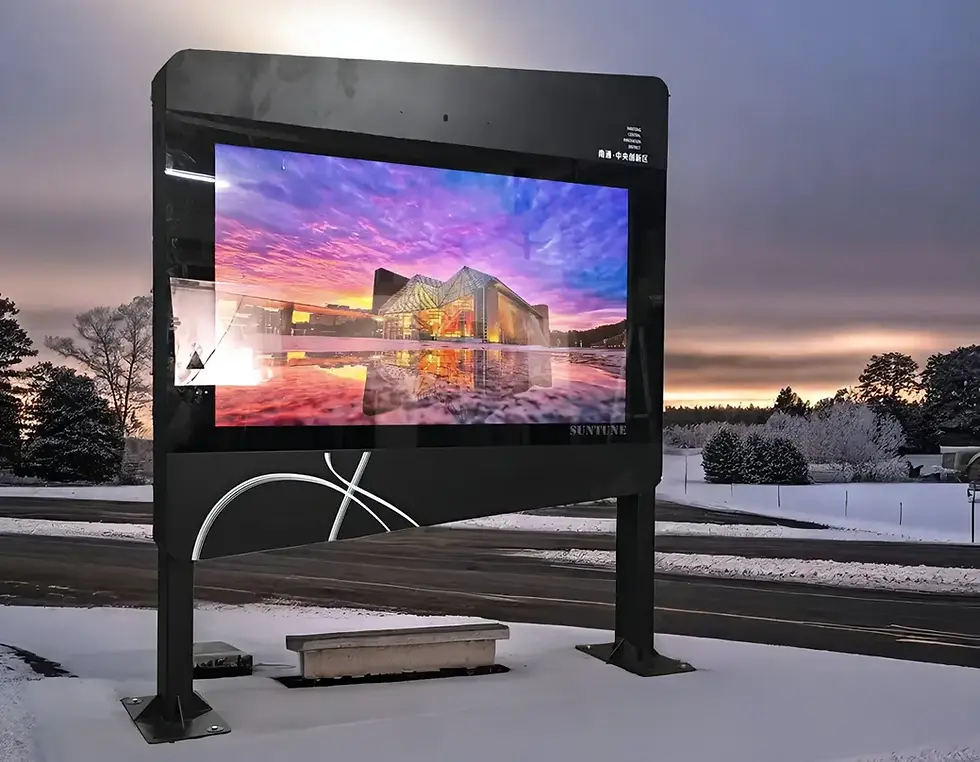
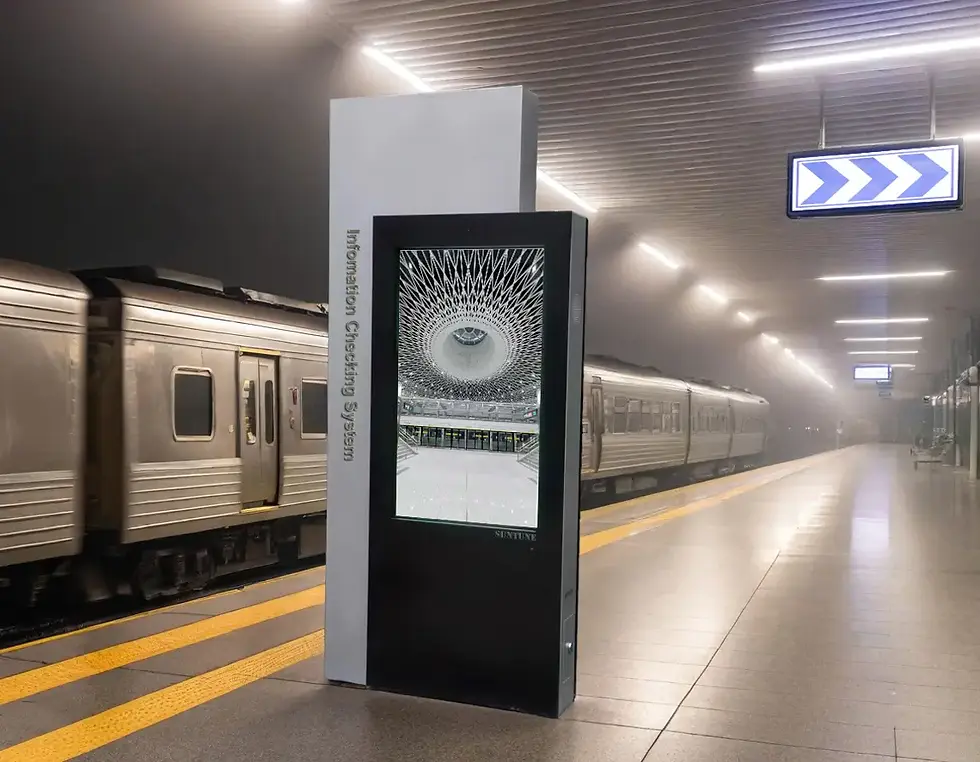
As cities evolve into digitally connected ecosystems, the role of public information systems is becoming increasingly important. Among the most visible components of this transformation are outdoor lcd displays in smart city kiosks, which serve as interactive communication hubs between urban infrastructure and the public.
These systems are no longer simple advertising screens. They function as real-time data terminals, navigation assistants, service platforms, and digital engagement points within modern city environments.
The Role of Smart City Kiosks in Urban Infrastructure
Smart city kiosks are deployed across transportation hubs, pedestrian zones, commercial districts, and civic centers. Their purpose is to deliver information dynamically and improve urban efficiency.
Typical applications include:
Real-time transit schedules and route updates
Public service announcements
City navigation and wayfinding support
Emergency alerts and safety information
Localized advertising and public engagement content
In this context, outdoor lcd displays in smart city kiosks act as critical infrastructure nodes rather than standalone advertising tools.
Why Outdoor LCD Technology Is Essential for Smart Cities
Outdoor environments present unique challenges that standard indoor displays cannot handle. Smart city kiosks must operate continuously under sunlight, rain, dust, and temperature fluctuations while maintaining high visibility and system stability.
High-brightness LCD technology ensures readability in direct sunlight, while advanced enclosure systems protect internal electronics from environmental stress.
This combination of optical performance and structural engineering defines the reliability of modern kiosk systems.
Enclosure Engineering and Environmental Protection
One of the most critical aspects of smart city kiosk design is enclosure engineering.
Outdoor LCD kiosks typically require:
IP-rated sealing systems
Corrosion-resistant structural materials
Vandal-resistant front glass protection
Cable management with environmental isolation
These elements ensure that outdoor lcd displays in smart city kiosks remain operational in high-traffic and unpredictable public environments.
Proper enclosure design directly impacts system lifespan and maintenance frequency.
Thermal Management in Urban Environments
Smart city kiosks operate continuously, often exposed to direct sunlight for extended hours. This creates significant internal heat buildup.
Without effective thermal design, performance degradation can occur, including screen dimming, system instability, or premature hardware failure.
Advanced kiosks integrate:
Passive airflow channels
Heat dissipation structures
Active cooling systems in high-load environments
Real-time temperature monitoring sensors
Thermal control is essential to ensure stable performance and long-term reliability in outdoor deployments.
Connectivity and Intelligent System Integration
Modern smart city kiosks are not isolated systems—they are connected nodes within a digital urban network.
They often integrate:
Cloud-based content management systems
Real-time data feeds from transportation and city databases
Remote monitoring and diagnostics platforms
Interactive touch or sensor-based interfaces
This connectivity transforms kiosks into intelligent infrastructure components, capable of adapting content based on location, time, and user behavior.
User Interaction and Public Experience Design
Beyond infrastructure functionality, smart city kiosks must also deliver a seamless user experience.
Key design considerations include:
High visibility interfaces for diverse lighting conditions
Intuitive navigation for tourists and residents
Accessibility compliance for public use
Responsive touch or proximity interaction systems
These elements ensure that the kiosk is not only functional but also user-centric and inclusive.
Durability and Long-Term Urban Deployment
Smart city infrastructure must operate reliably for years with minimal downtime. This requires robust mechanical and electronic design.
Outdoor LCD kiosks are engineered with:
Shock-resistant structural frames
UV-resistant glass coatings
Long-life backlight systems
Modular serviceable components
This ensures that outdoor lcd displays in smart city kiosks remain operational under continuous public usage and environmental exposure.
The Evolution of Smart City Display Networks
As urban environments continue to digitize, smart city kiosks will evolve into more advanced multi-functional platforms.
Future systems are expected to incorporate:
AI-driven content personalization
Predictive maintenance systems
Energy-efficient adaptive brightness control
Integration with mobility and IoT ecosystems
The future of smart cities depends heavily on scalable, reliable, and intelligent display infrastructure capable of supporting real-time urban communication.
In this evolution, outdoor LCD kiosks will remain one of the most visible and essential components of the connected city landscape.
Build Your Smart City Display Infrastructure
If you are planning a smart city project, transportation hub upgrade, or public information system deployment, selecting the right outdoor LCD kiosk solution is critical for long-term success.
At SUNTUNE SignageHub, we design and manufacture industrial-grade outdoor lcd displays in smart city kiosks with advanced enclosure protection, thermal management, and high-brightness performance tailored for demanding urban environments.
👉 Contact us today to discuss your project requirements, OEM/ODM customization, or large-scale deployment solutions.
Let’s build the next generation of smart city digital infrastructure together.

Comments