
Power Consumption of High Brightness Displays: What Every Outdoor Signage Buyer Should Know

Outdoor digital signage must remain visible in challenging lighting conditions, often under direct sunlight where standard commercial displays struggle to perform. This requirement has driven the widespread adoption of high-brightness LCD technology capable of producing significantly greater light output than traditional indoor screens.
However, increased brightness comes with an important consideration: power consumption of high brightness displays. For advertisers, retailers, transportation operators, municipalities, and system integrators, understanding how brightness affects energy usage is essential when evaluating long-term operating costs and return on investment.
As outdoor display networks continue to expand worldwide, energy efficiency is becoming just as important as visibility.
Why High Brightness Requires More Power
Display brightness is measured in nits, which represent the amount of light emitted by a screen.
Indoor commercial displays typically operate between 250 and 700 nits. Outdoor LCD displays often range from 1,500 to over 4,000 nits, depending on application requirements and environmental conditions.
Producing additional light requires additional electrical energy. As brightness levels increase, power demand generally rises as well. This relationship makes energy consumption one of the primary operational considerations for outdoor digital signage deployments.
Higher brightness improves visibility, but it also increases energy requirements.
The goal is not simply maximizing brightness but achieving the optimal balance between visibility and efficiency.
Understanding What Influences Power Consumption
Many buyers assume that screen size alone determines energy usage. In reality, several factors influence the power consumption of high brightness displays.
These factors include:
Brightness output levels
Screen size and panel technology
Backlight efficiency
Ambient light conditions
Operating schedules
Thermal management systems
Automatic brightness controls
Two displays of the same size may have significantly different energy consumption profiles depending on their design and operating conditions.
Brightness Is Not Always Operating at Maximum Levels
One common misconception is that outdoor displays operate at full brightness continuously.
Most modern outdoor LCD systems incorporate automatic brightness adjustment technology that responds to surrounding environmental conditions. Ambient light sensors continuously measure outdoor lighting levels and adjust screen output accordingly.
During cloudy weather, early morning hours, or nighttime operation, displays often reduce brightness substantially. This not only lowers energy consumption but also improves viewer comfort and extends component lifespan.
Intelligent brightness control is one of the most effective tools for improving display efficiency.
The Role of Backlight Technology
The backlight system is one of the largest contributors to display power consumption.
Advancements in LED technology have dramatically improved efficiency over the past decade. Modern LED backlights can generate higher brightness levels while consuming less energy than earlier generations.
Manufacturers continue developing more efficient backlight architectures that optimize light output and reduce waste. Improvements in optical design also help direct more light toward viewers rather than losing energy within the display structure.
These innovations allow newer outdoor displays to achieve stronger performance without proportionally increasing power demand.
Thermal Management and Energy Usage
Power consumption and thermal management are closely connected.
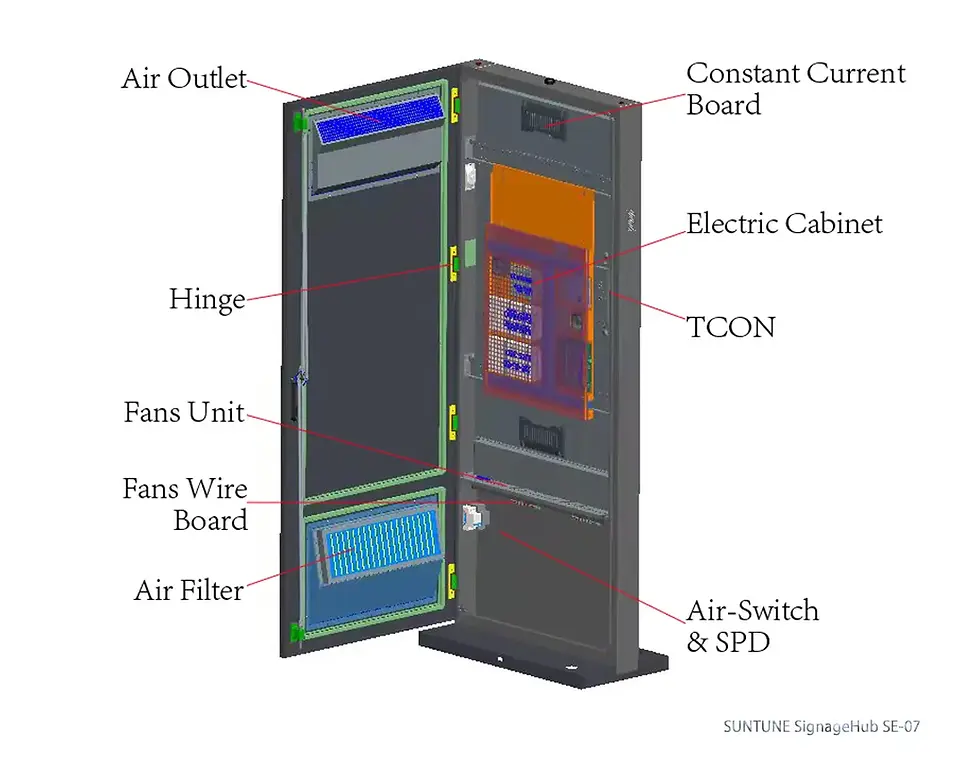
As displays consume electricity, they generate heat. High-brightness outdoor LCD systems often require sophisticated cooling mechanisms to maintain safe operating temperatures and ensure reliable performance.
Cooling systems themselves consume energy, contributing to overall operational costs. Fans, heat exchangers, climate-control systems, and intelligent ventilation technologies all influence total power requirements.
Efficient thermal management can reduce energy waste while protecting critical components from heat-related degradation.
Organizations evaluating outdoor displays should consider both display power consumption and supporting thermal infrastructure.
Why Sunlight Readability Is More Than Brightness
An important industry trend involves improving visibility through optical engineering rather than simply increasing brightness.
Technologies such as:
Anti-reflective glass
Optical bonding
High contrast panels
Advanced display coatings
help improve sunlight readability without requiring excessive increases in brightness.
By reducing reflections and preserving contrast, these technologies allow displays to achieve excellent outdoor visibility while maintaining more efficient power consumption levels.
This approach often delivers better overall performance than relying solely on higher nit ratings.
Operating Costs Across Large Display Networks
For organizations managing multiple outdoor displays, energy costs can become a significant operational expense.
A single display may consume a manageable amount of power, but large-scale networks operating twenty-four hours a day can accumulate substantial energy usage over time.
This makes energy efficiency an important consideration during project planning.
When calculating total cost of ownership, operators should evaluate:
Initial hardware investment
Energy consumption
Maintenance requirements
Cooling system demands
Equipment lifespan
Long-term operating costs often have a greater financial impact than initial purchase price alone.
Sustainability and Environmental Goals
Many cities and businesses are actively pursuing sustainability initiatives.
Energy-efficient display technologies help reduce carbon emissions and support environmental objectives while maintaining effective public communication capabilities.
Smart city projects increasingly prioritize efficient infrastructure solutions that balance performance with responsible energy usage. Outdoor displays that incorporate intelligent power management and adaptive brightness controls align well with these goals.
As environmental regulations and sustainability expectations continue evolving, energy efficiency will become an even more important purchasing criterion.
Future Innovations in Display Efficiency
The outdoor display industry continues investing in technologies that improve efficiency without sacrificing visibility.
Emerging developments include more advanced LED backlights, AI-driven brightness optimization, adaptive display systems, improved thermal management architectures, and alternative display technologies such as reflective LCD solutions.
These innovations aim to reduce the power consumption of high brightness displays while maintaining the exceptional readability required for outdoor environments.
Companies such as SUNTUNE recognize that future outdoor display solutions must deliver both outstanding visibility and sustainable operational performance.
Balancing Visibility and Efficiency
The future of outdoor digital signage will increasingly focus on intelligent energy management. Rather than pursuing brightness alone, manufacturers and system operators are adopting holistic approaches that combine optical engineering, thermal optimization, adaptive controls, and efficient hardware design.
Organizations evaluating outdoor display investments should consider energy consumption as part of a broader performance strategy. The most successful deployments will be those that achieve excellent visibility while maintaining manageable operating costs and supporting long-term sustainability objectives.
Understanding the power consumption of high brightness displays helps decision-makers select solutions that deliver value not only today but throughout the entire lifecycle of the display network.
Looking for Energy-Efficient Outdoor Digital Signage Solutions?
Selecting the right outdoor display involves more than achieving high brightness. Energy efficiency, operating costs, thermal management, and long-term reliability all play critical roles in project success.
Contact our team today to explore outdoor LCD solutions engineered for exceptional sunlight readability, intelligent power management, and optimized total cost of ownership. Whether you're planning a smart city deployment, transportation network, retail display, or outdoor advertising project, we can help you identify the right solution for your requirements.


Comments